Sugar Futures Market

Sugar Production and Its Diverse Applications

Major Sugar-Producing Regions in the U.S.

Sugar in the United States is primarily derived from two sources: sugarcane and sugar beets.

Source Top States Notes
Sugarcane Florida, Louisiana, Texas, Hawaii (historical) Florida leads (mainly Palm Beach Co.); Louisiana is a strong producer. Hawaii ceased production in 2016.
Sugar Beets Minnesota, North Dakota, Michigan, Idaho, Nebraska, Montana, California, Wyoming, Oregon, Washington, Colorado Beet production is centered in the Upper Midwest, Great Plains, and Pacific Northwest.
  • Sugarcane is grown in the Southern U.S., with Florida and Louisiana as top producers.
  • Sugar beets are cultivated in temperate regions, especially the Upper Midwest and West.
  • Together, these two sources form the basis of the U.S. sugar supply chain.
  • Hawaii, once a major sugarcane producer, ended commercial operations in 2016.

Historical Context

The history of sugar production in the U.S. is intertwined with significant socio-economic developments:

  • Slavery in Louisiana: Sugar plantations in Louisiana heavily relied on enslaved labor, contributing to the entrenchment of slavery in the region.
  • Annexation of Hawaii: Economic interests tied to sugar production played a role in the U.S. annexation of Hawaii in the late 19th century.
Non-Food Applications of Sugar

Beyond its role in food and beverages, sugar serves various industrial and commercial purposes:

  • Pharmaceuticals: Sugar enhances the taste of medications and acts as a binder in pill formulations.
  • Wastewater Treatment: Liquid sugar is utilized to facilitate the denitrification process in wastewater management.
  • Agriculture: Sugar solutions are applied in vineyards to stimulate microbial activity, promoting soil health.
  • Cleaning: Sugar can be an effective agent for removing certain stains from clothing and appliances.
  • Bioplastics: Sugar serves as a base material in producing bioplastics, offering a renewable alternative to conventional plastics.
Chart

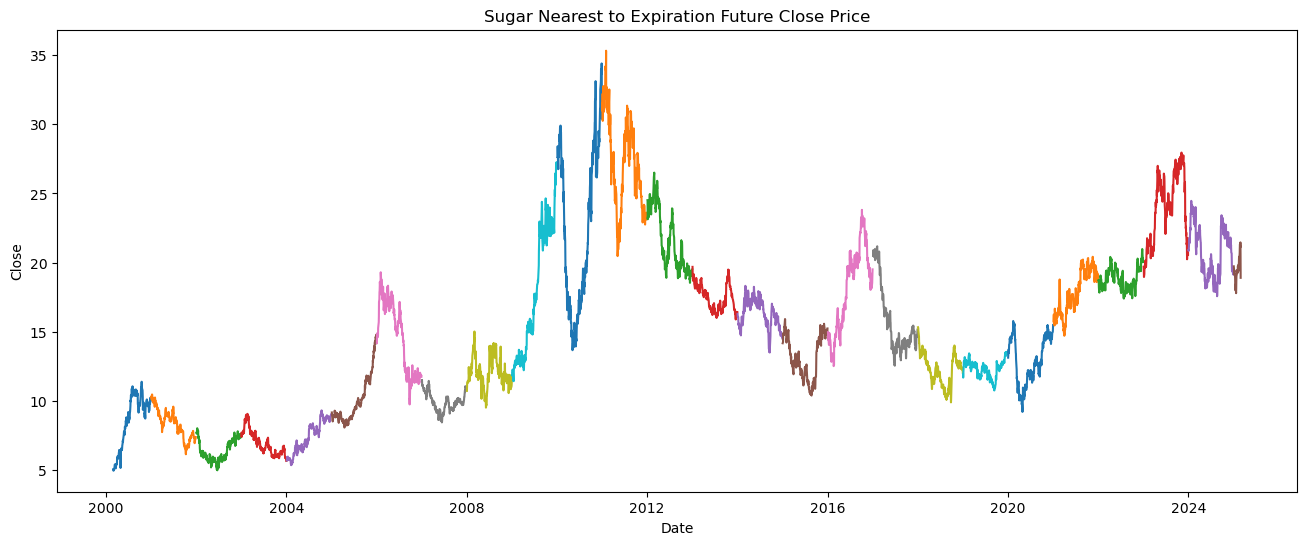
Single Timeline of Closing Price

There are low points such as the period leading up to 2008, 2016, and 2020 which align with certain global recessions.

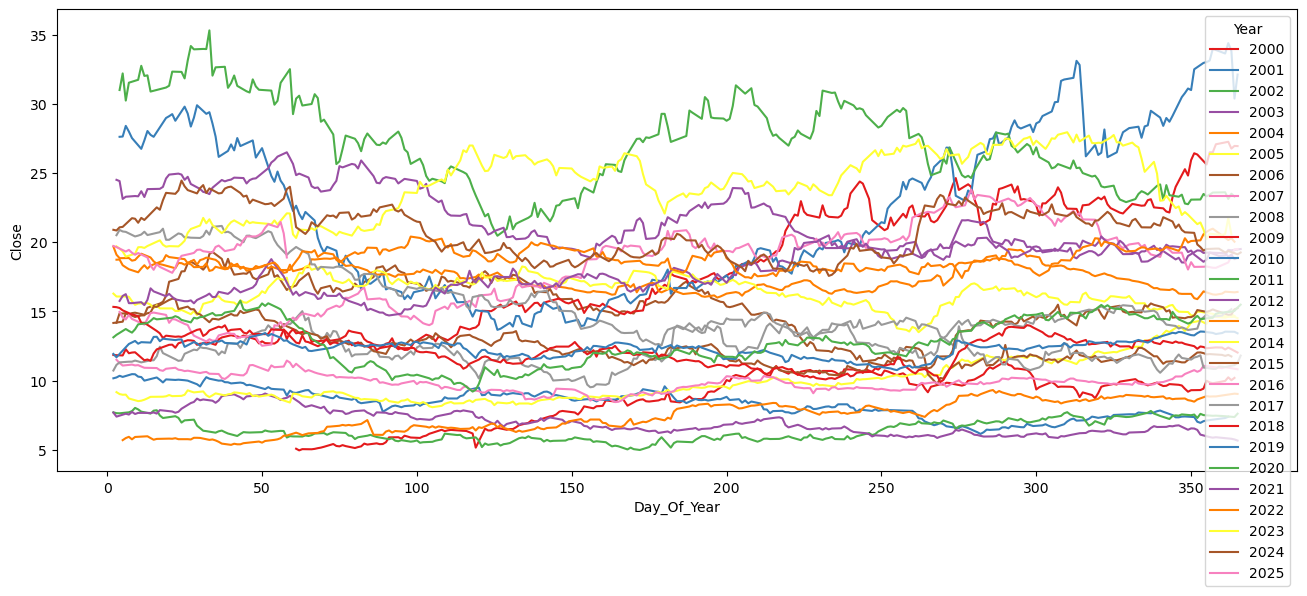
By-Year Closing Price

There is a price drop around the 125th day which may correspond to the expiry of Sugar No. 16 contracts in April.

Chart
Chart

30-Day Rolling Volatility of Closing Price

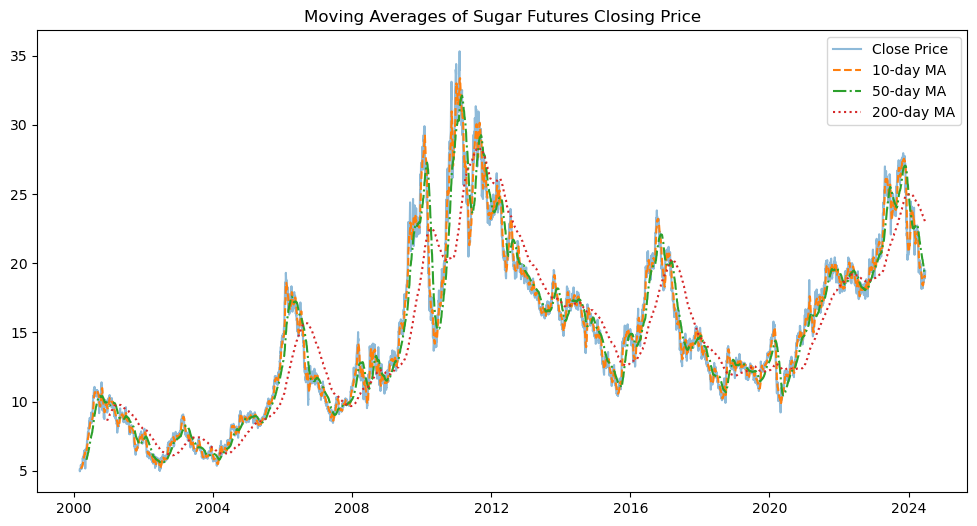
Moving Averages of Closing Price

Chart
Chart

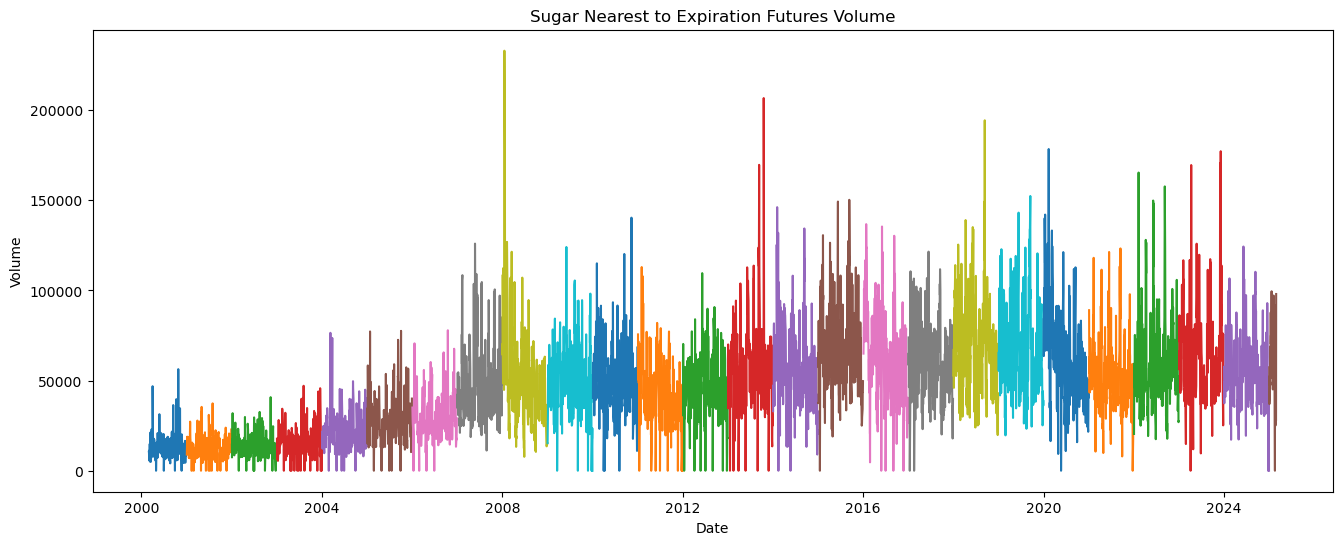
Single Timeline of Volume

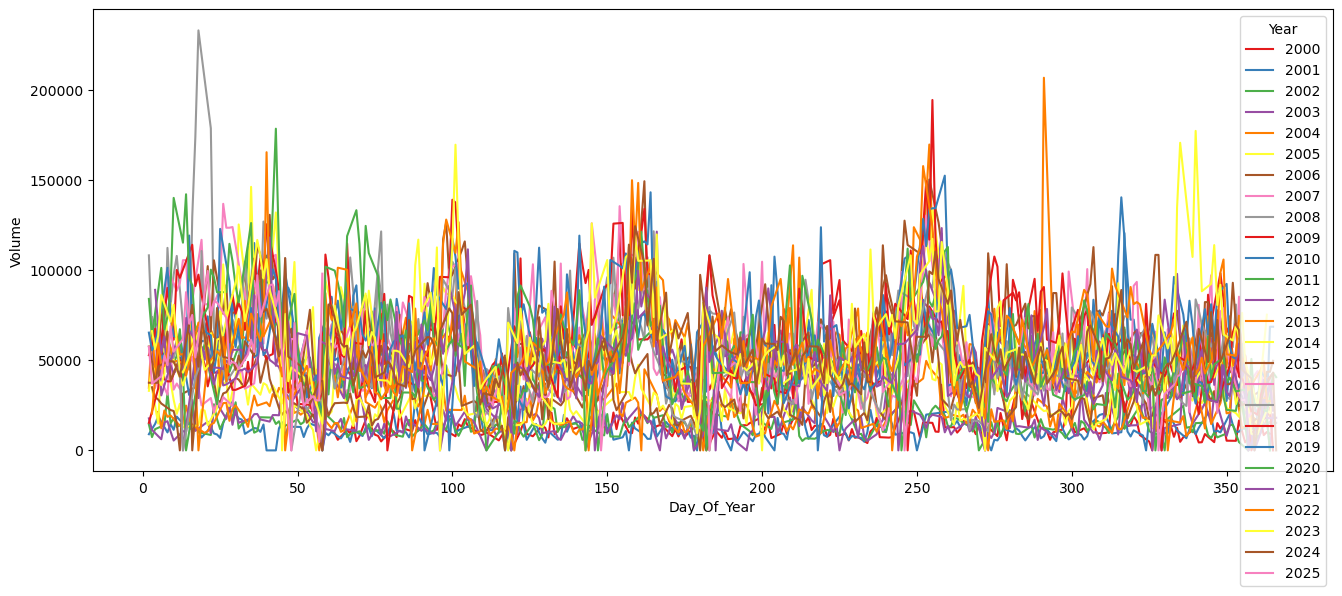
By-Year Volume

Delivery months are January, March, May, July, September, November and the last trading days are on the 8th day of the prior month. There appear to be spikes in volume around these times.

Chart
Chart

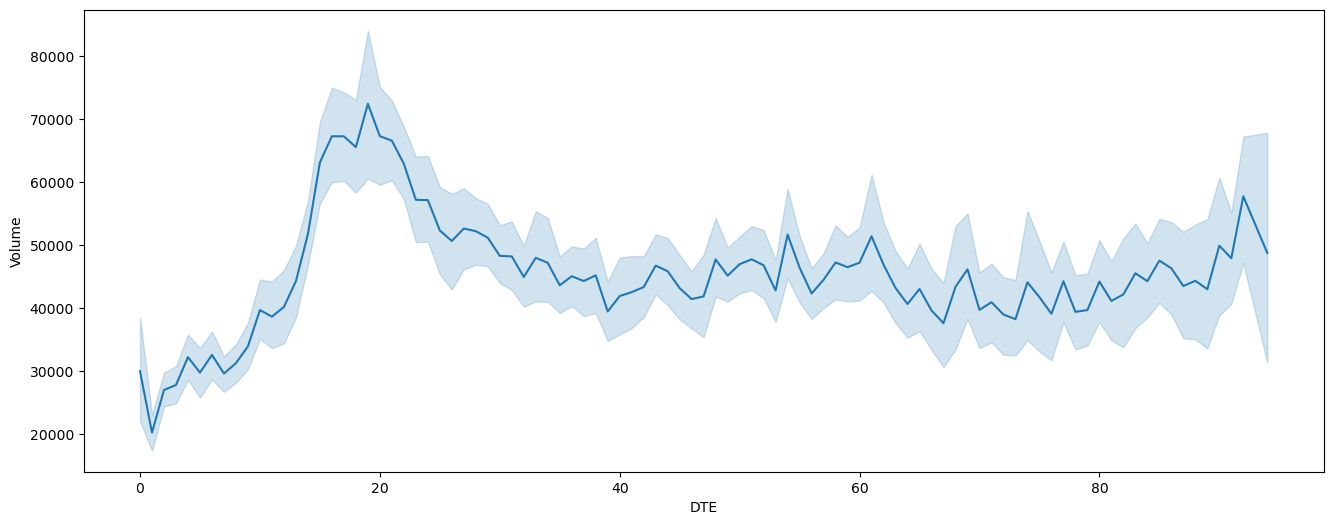
Volume based on Days Till Expiry

Low volume near day of expiry until on the last trading day, there is a spike as traders clear their positions.

Sugar Futures Log Returns

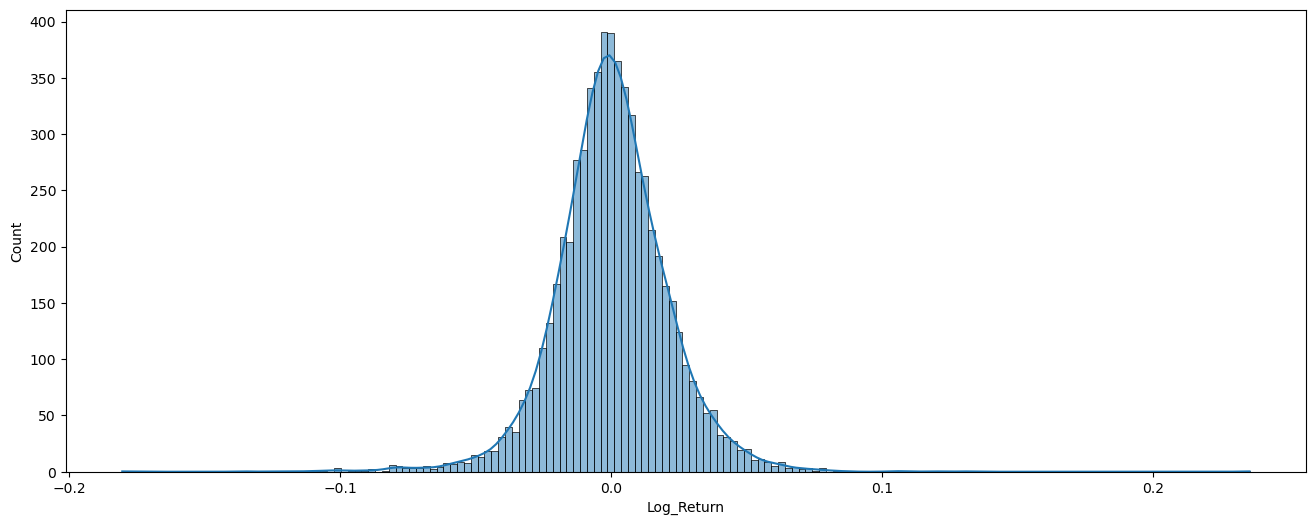
Empirically, the log returns seem normally distributed with mean 0.

Chart
Chart

Comparison of Sugar and Corn Futures (Standardized)

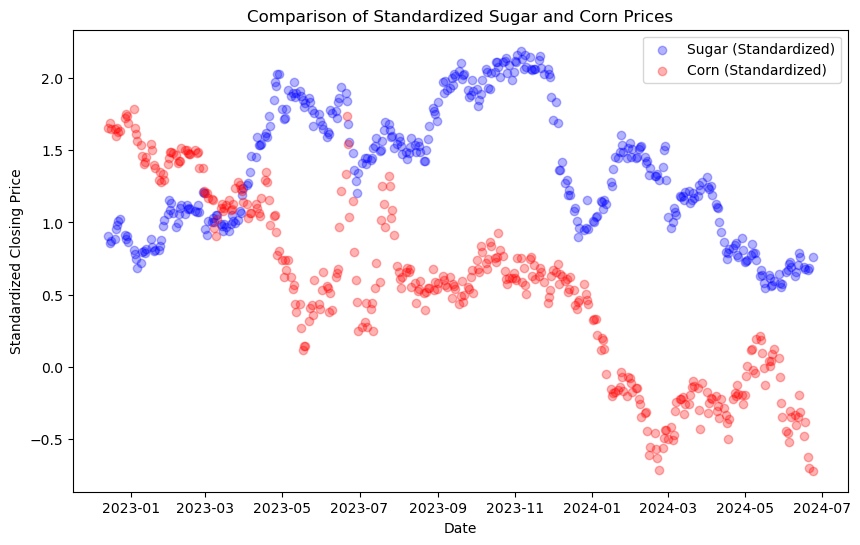
Since corn syrup is a widely used sweetener, we plot the two together. Very roughly, it does seem like the shape of the curve for sugar is ahead of the one for corn. E.g. one of the minima for sugar is near the end of 2023 while a similar minimum for corn occurs in February of 2024.

Partial Autocorrelation of 7-Day Log Returns

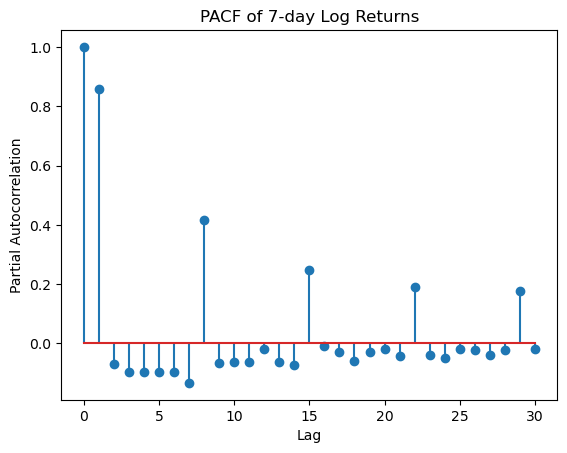
As a secondary point of interest, theory of geometric Brownian motion suggests there be spikes in the partial autocorrelation function at days $x \equiv 1 \pmod{7}$, which indeed is observed here.

Chart